
Rear Quarter Panel Repair for Athens & Atlanta, GA
Looking for rear quarter panel repair in the Athens or Atlanta area? EZ Auto Spa specializes in paintless dent repair and comprehensive collision repair services that restore your vehicle to showroom condition. Whether you’re dealing with parking lot dings, collision damage, or corrosion issues on your rear quarter panel, we bring the expertise and precision equipment needed to deliver factory-quality results across all makes and models, including luxury and high-value vehicles.
Your rear quarter panel isn’t just another body part. It’s a structural component that directly impacts your vehicle’s appearance, safety, and resale value. That’s why North Georgia drivers trust us to handle repairs with the care and attention their investment deserves. We understand the unique challenges Georgia’s climate presents, and we’re equipped to address them with techniques that preserve your vehicle’s original finish whenever possible.
What Is a Rear Quarter Panel?
Your rear quarter panel is the sheet metal section that extends from the rear door to the taillight, wrapping around the wheel well and forming part of your vehicle’s structural framework. Unlike bolt-on parts like bumpers or fenders, quarter panels are welded directly to the vehicle’s frame during manufacturing, making them integral to your car’s structural integrity.
This permanently attached component serves multiple critical functions. It protects the rear wheel well, houses mounting points for taillights and trim, and contributes to the vehicle’s overall crash safety performance. On luxury vehicles, the quarter panel often features complex curves and character lines that define the car’s design language.
Because of its size and structural importance, rear quarter panel damage requires careful assessment. What looks like a simple dent might affect alignment, door fit, or even compromise the vehicle’s ability to protect occupants in a side-impact collision. That’s why professional evaluation is essential, even for damage that seems minor at first glance.
Common Types of Rear Quarter Panel Damage
Understanding the type of damage you’re dealing with helps set realistic expectations for repair methods and costs. Here’s what we see most often at our Athens and Atlanta locations.
Minor Dents and Dings
Parking lot encounters, shopping carts, and minor fender benders create the most common quarter panel issues. These dents typically don’t break the paint and range from golf ball-sized door dings to larger creases from backing into posts or being sideswiped at low speed.
The good news? Many of these are perfect candidates for paintless dent repair (PDR). When the paint remains intact and the metal hasn’t been stretched beyond its elastic limit, we can often restore the panel to its original contour without any refinishing. This preserves your factory paint, maintains your vehicle’s value, and costs significantly less than traditional bodywork.
Collision Damage
Higher-speed impacts create more severe damage that often requires traditional repair techniques or replacement. Collision damage typically involves paint cracking, metal creasing, or structural deformation that affects how doors align or how the vehicle tracks down the road.
We see this frequently on Georgia highways, someone merges without looking, or a rear-end collision pushes the vehicle into something else. These repairs demand precision measurement to ensure the vehicle’s frame geometry remains correct and that all safety systems function as intended.
Rust and Corrosion
While Georgia’s climate is generally rust-friendly compared to northern salt belt states, moisture still finds its way into wheel wells, trapped dirt, and areas where paint has been compromised. Older vehicles or those with previous damage repairs may develop rust around the wheel well lip or along the lower quarter panel edge.
Corrosion damage requires a different approach entirely. Surface rust might be treated and refinished, but structural rust often necessitates cutting out the affected metal and welding in new material, or replacing the quarter panel entirely.
Repair Methods for Rear Quarter Panels
The right repair method depends on damage severity, your vehicle’s value, and your goals for the finished result. At EZ Auto Spa, we match the technique to your specific situation.
Paintless Dent Repair
PDR is the gold standard when conditions allow its use. Using specialized tools, we access the back side of the panel (often through the trunk or by temporarily removing interior panels and lights) and carefully massage the metal back to its original shape. The process requires significant skill, reading the metal, understanding how it wants to move, and working it gradually to avoid creating new damage.
This method works brilliantly for hail damage, door dings, and minor collision dents where the paint hasn’t cracked. You keep your original factory finish, which matters tremendously for resale value. Insurance companies often prefer PDR because it costs less and requires no paint work, reducing both expense and repair time.
We’ve successfully performed PDR on everything from Honda Civics to Mercedes S-Class vehicles. The technique is especially valuable on luxury cars with exotic paint finishes that are difficult and expensive to match.
Traditional Body Filler and Refinishing
When paint is damaged or the metal has been stretched too far for PDR, traditional bodywork becomes necessary. We remove any damaged paint, carefully reshape the metal as close to original as possible, then apply body filler to perfect the contour. After shaping and sanding the filler, we prime, paint, and clear-coat the repair area.
This process demands expertise in color matching, particularly challenging with modern multi-stage metallic and pearl finishes. We blend the repair into adjacent panels to eliminate any visible transition line. On high-value vehicles, we often refinish entire panels rather than spot-repair to ensure consistent appearance under all lighting conditions.
Our paint booth maintains controlled temperature and humidity, filtered air prevents contamination, and we use premium automotive refinishing products that meet or exceed OEM specifications. These details separate acceptable repairs from invisible ones.
Quarter Panel Replacement
Severe collision damage or extensive rust sometimes makes replacement more practical than repair. Quarter panel replacement is major work, we cut the damaged panel away from the vehicle’s structure, prepare and align a new panel, then weld it into place before finishing the seams and refinishing the new panel.
This approach restores full structural integrity and often costs less than extensive repair work trying to save a severely damaged original panel. It’s common on older vehicles where the repair cost would approach or exceed the vehicle’s value, but we also recommend it on newer luxury vehicles when maintaining structural and safety performance is paramount.
Replacement requires precision measuring equipment to ensure proper alignment and certified welding procedures that maintain the vehicle’s crash safety ratings.
Why Professional Repair Matters for Luxury and High-Value Vehicles
Your BMW, Mercedes, Lexus, or Tesla wasn’t built with DIY fixes in mind. These vehicles feature high-strength steel, aluminum body panels, and complex manufacturing techniques that require specialized knowledge and equipment to repair correctly.
Luxury vehicles often incorporate advanced materials in their quarter panels. Aluminum, for instance, work-hardens differently than steel and requires different PDR techniques and tools. Some manufacturers use mixed-material construction where steel and aluminum meet, demanding specific welding procedures to maintain structural integrity.
Factory paint on premium vehicles often includes multiple layers, primer, base coat, metallic or pearl mid-coat, and clear coat, with specific application requirements. Color matching goes beyond simply finding the right paint code. We account for paint aging, metallic flake orientation, and how different lighting conditions reveal imperfections invisible under shop lights.
Then there’s resale value. A poorly executed quarter panel repair becomes immediately obvious during pre-purchase inspections. Paint thickness meters detect excessive body filler. Misaligned body gaps signal structural damage that wasn’t properly addressed. These red flags crater your vehicle’s value when it’s time to sell or trade.
Professional repair with proper documentation actually protects your investment. Insurance companies and buyers accept repairs performed by certified shops using OEM procedures. We provide detailed records of the work performed, materials used, and warranty coverage, documentation that adds confidence during resale.
We’ve worked with virtually every luxury and premium brand on the road. We understand the specific requirements each manufacturer demands, we invest in the training and equipment needed to meet those standards, and we stand behind our work with warranties that give you peace of mind.
Cost Considerations for Rear Quarter Panel Repair
Rear quarter panel repair costs vary dramatically based on damage extent, repair method required, and your vehicle’s specifics. Understanding these factors helps you evaluate quotes and make informed decisions.
Paintless dent repair typically runs $150-$500 for minor door dings, but larger dents or multiple impacts can reach $800-$1,500. PDR pricing reflects technician skill and time required, not materials, since there aren’t any. Complex dents in difficult-to-access areas cost more because they demand advanced techniques and sometimes require removing interior components or lights.
Traditional body filler and refinishing generally costs $800-$2,500 depending on damage size and paint complexity. Metallic and pearl finishes require more expensive materials and additional labor for proper color matching and blending. Luxury vehicles often need larger blend areas to achieve invisible repairs, increasing both material and labor costs.
Full quarter panel replacement represents the high end: $2,000-$5,000 or more. You’re paying for the new panel itself, extensive labor to remove the old panel and install the new one, welding, alignment, and complete refinishing of a large body section. On some luxury vehicles with complex panels or aluminum construction, costs can exceed $6,000.
Several factors push costs higher. Luxury vehicle parts cost more, OEM quarter panels for premium brands run significantly more than aftermarket panels for mainstream vehicles. Complex paint colors require additional labor. Aluminum panels need specialized equipment and trained technicians. Additional damage discovered during teardown adds to the final bill.
Insurance coverage makes a big difference. If you’re filing a claim, your deductible is typically your only out-of-pocket cost (assuming the damage wasn’t pre-existing). Insurance companies often prefer PDR when possible because it saves them money, and it saves you from paint work that might affect resale value.
For out-of-pocket repairs, get detailed written estimates that specify the repair method, materials, and warranty coverage. The cheapest quote isn’t always the best value. A quality repair that preserves your vehicle’s appearance and value is worth paying for.
How to Choose the Right Repair Shop
Not all body shops are created equal, and your vehicle deserves more than the cheapest option your insurance company suggests.
Start with certification and training. Shops that invest in I-CAR training (the industry’s gold standard), manufacturer certifications, and continuing education demonstrate commitment to quality. Ask whether technicians are certified for your specific vehicle brand, many luxury manufacturers require brand-specific training for shops to perform warranty-approved repairs.
Equipment matters tremendously. Proper quarter panel repair requires paint mixing systems for accurate color matching, computerized measuring systems to verify structural alignment, climate-controlled paint booths to prevent contamination, and specialized PDR tools for damage that doesn’t require refinishing. Tour the facility if possible. A well-organized, clean shop with modern equipment typically delivers better results.
Reputation provides insight the shop’s website won’t reveal. Check Google reviews, but dig deeper than star ratings. Look for comments about communication, quality of finished work, and how the shop handles problems. Ask friends, colleagues, or luxury car clubs for recommendations. Athens and Atlanta have tight automotive communities, word travels fast about shops that consistently deliver or consistently disappoint.
Warranties signal confidence. We guarantee our work because we’re confident in our processes and materials. Shops that hedge about warranties or offer limited coverage may be cutting corners. Ask specifically about warranty terms: what’s covered, for how long, and whether the warranty is honored if you move or sell the vehicle.
Communication style tells you a lot. The right shop explains your options clearly, provides detailed estimates, answers questions without making you feel stupid, and keeps you updated throughout the repair process. You’re trusting them with a significant investment, you deserve to understand what they’re doing and why.
At EZ Auto Spa, we’ve built our reputation on transparency and quality. We serve all makes and models, but we specialize in the careful attention luxury and high-value vehicles demand. We’re not the cheapest option in Athens or Atlanta, but we deliver results that protect your vehicle’s value and appearance for years to come.
Protecting Your Investment After Repair
A quality rear quarter panel repair restores your vehicle’s appearance and structural integrity, but your work doesn’t end when you drive out of our shop. Smart post-repair care preserves that fresh finish and protects your investment long-term.
Consider paint protection film (PPF) for the repaired area. This transparent urethane film shields the fresh paint from rock chips, scratches, and UV damage that would otherwise compromise the repair over time. It’s particularly valuable on quarter panels because they’re exposed to road debris kicked up by the rear tires. Many of our Athens and Atlanta clients add PPF to repaired panels specifically to prevent recurring damage.
Ceramic coating provides another layer of defense. While it won’t stop rock chips like PPF, ceramic coating creates a hydrophobic surface that repels water, makes washing easier, and protects against environmental contaminants like bird droppings, tree sap, and road salt. Georgia’s pollen seasons are brutal on car finishes, ceramic coating helps prevent that yellow film from bonding to your paint.
Regular washing matters more than most people realize. Dirt, pollen, and road grime act like fine sandpaper on your paint when left to accumulate. Use proper car wash soap (not dish detergent), soft microfiber towels, and the two-bucket method to minimize swirl marks. Automatic car washes with brushes can mar fresh paint, so stick with touchless washes or hand washing for at least the first few months after repair.
Address new damage quickly. That little door ding you’re planning to “get to eventually” will eventually turn into a bigger problem. Paint chips expose bare metal to moisture, starting rust formation that spreads under the surrounding paint. Small issues caught early often qualify for simple PDR: ignored, they escalate into expensive paint work.
Park strategically when possible. End spots in parking lots, spaces away from cart returns, and covered parking all reduce your risk of new damage. Yes, you might walk an extra fifty feet. Your rear quarter panel, and your bank account, will thank you.
Frequently Asked Questions
What is a rear quarter panel and why is it important?
A rear quarter panel is the sheet metal section extending from the rear door to the taillight, welded directly to the vehicle’s frame. It’s crucial for structural integrity, crash safety, and protects the rear wheel well while housing taillights and trim.
How much does rear quarter panel repair typically cost?
Costs vary by damage severity: paintless dent repair ranges from $150-$1,500, traditional body filler and refinishing costs $800-$2,500, and full quarter panel replacement runs $2,000-$5,000 or more, depending on the vehicle and complexity.
Can paintless dent repair fix rear quarter panel damage?
Yes, when the paint remains intact and metal hasn’t been stretched beyond repair. Paintless dent repair works excellently for door dings, hail damage, and minor collision dents, preserving your factory finish and maintaining resale value.
How long does it take to replace a rear quarter panel?
Quarter panel replacement typically takes 3-7 days, depending on complexity. The process involves cutting away the damaged panel, welding in a new one, refinishing, and ensuring proper alignment—all requiring precision equipment and certified techniques.
Should I repair or replace a damaged rear quarter panel?
The decision depends on damage severity. Minor dents qualify for paintless dent repair or traditional bodywork, while severe collision damage or extensive rust makes replacement more practical and cost-effective for restoring structural integrity.
Does rear quarter panel damage affect car resale value?
Yes, significantly. Poorly executed repairs are detected during pre-purchase inspections through paint thickness meters and misaligned body gaps. Professional repairs with proper documentation protect your investment and maintain buyer confidence during resale.
Serving Atlanta + Athens
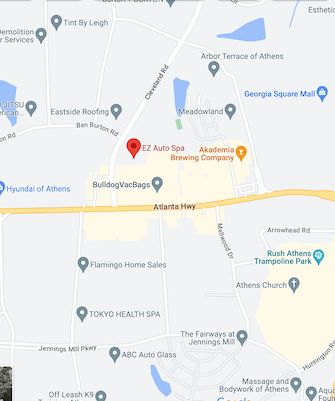
EZ Auto Spa has two locations conveniently located to serve the Metro Atlanta & Metro Athens area. We serve a wide geographic area and can work with your schedule to make your service happen.
Open Weekdays from
8:30-5:00
Call to ask any question
706-971-7867
EZ Auto Spa Duluth
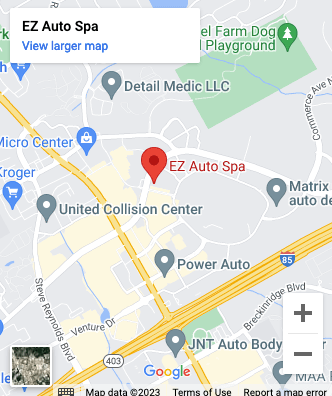
3492 Satellite Blvd #120 Duluth, GA 30096