
Car Bird Dropping Prevention for Athens & Atlanta, GA
Looking for car bird dropping prevention solutions in the Athens or Atlanta area? EZ Auto Spa specializes in paint protection solutions, including ceramic coatings and paint protection film, that shield your vehicle’s finish from the acidic damage bird droppings cause. Bird waste isn’t just unsightly: it’s actively destroying your clear coat and paint, especially on luxury and high-value vehicles. We’re a trusted local provider serving North Georgia with the expertise and professional-grade products to prevent costly paint damage before it happens. Whether you drive a BMW, Tesla, or any make and model, we understand what Georgia vehicle owners face and deliver protective solutions that work.
Why Bird Droppings Are a Serious Threat to Your Car’s Paint
You’ve probably noticed those white and brown splotches on your hood after parking beneath a tree. But what you might not realize is that bird droppings begin damaging your vehicle’s finish within hours, not days or weeks.
The Chemical Composition That Damages Clear Coat and Paint
Bird droppings contain uric acid with a pH level between 3 and 4.5, making them highly acidic. Your vehicle’s clear coat is designed to protect against typical environmental exposure, but it wasn’t engineered to withstand prolonged contact with this level of acidity. When droppings land on your paint, the acid immediately begins a chemical reaction that etches into the clear coat.
Here’s where it gets worse: heat accelerates the process. Under Georgia’s intense summer sun, your paint surface heats up significantly, causing the clear coat to soften and expand. When bird droppings are present, they settle deeper into that softened surface. As temperatures drop, even just from day to night, the clear coat contracts and hardens around the dried dropping, creating permanent etching that looks like a dull, crater-like mark.
The uric acid doesn’t just sit on the surface. It penetrates microscopic imperfections in your clear coat, working its way deeper with every hot day. Once etching occurs, you’re not dealing with something that washes off. You’re looking at permanent paint damage that requires professional correction, wet sanding, compounding, or in severe cases, a complete repaint of the affected panel.
Long-Term Impact on Luxury and High-Value Vehicles
For owners of luxury and high-value vehicles, the stakes are considerably higher. Premium paint finishes, whether it’s BMW’s multi-stage metallic, Porsche’s special-order colors, or Tesla’s modern formulations, are particularly vulnerable to acid etching. These advanced paint systems often have thinner clear coats or specialized finishes that show damage more readily than standard automotive paint.
The financial impact goes beyond aesthetics. Paint etching from bird droppings reduces your vehicle’s resale value. Prospective buyers and certified pre-owned inspectors look closely at paint condition, and visible etching signals neglect or insufficient protection. Even minor etching across multiple panels can reduce your vehicle’s value by hundreds or even thousands of dollars.
Repair costs compound quickly. A single panel repaint at a quality body shop can run $500 to $1,500 depending on the vehicle and paint complexity. Multiply that across multiple affected panels, and you’re facing a repair bill that far exceeds the cost of preventive protection. For North Georgia vehicle owners, where we have significant tree coverage and active bird populations year-round, this isn’t a hypothetical problem, it’s an ongoing threat to your investment.
Strategic Parking Choices to Minimize Exposure
Where you park your vehicle matters more than most people think. Bird droppings aren’t random, they’re concentrated in specific locations where birds congregate, feed, and roost.
Whenever possible, choose covered parking: garages, carports, or covered lots. This is your first and most effective line of defense. If covered parking isn’t available, avoid parking directly beneath trees, power lines, light poles, and building overhangs where birds perch. Look up before you park. If you see birds, nests, or existing droppings on the ground, find another spot.
Pay attention to the areas around your regular parking locations. Are there berry-producing trees nearby? Birds are drawn to food sources, and certain trees, like mulberries, dogwoods, and Bradford pears, attract heavy bird activity during fruiting seasons. Similarly, birds flock to areas near water sources and open fields where insects are abundant.
At work or shopping centers, parking farther from landscaped areas reduces your exposure. Yes, it means a longer walk, but it’s considerably cheaper than paint correction. When parking at home, consider whether your driveway or street location puts you under flight paths to nearby trees or roosting spots.
Identifying High-Risk Locations in North Georgia
North Georgia presents unique challenges for vehicle owners. Our region’s dense tree canopy, particularly around Athens and the wooded suburbs of Metro Atlanta, creates ideal bird habitat. Neighborhoods with mature oaks, pines, and hardwoods see consistently high bird activity.
Waterfowl pose particular risks near Lake Lanier, Lake Oconee, and the Chattahoochee River corridor. Geese and ducks produce larger, more damaging droppings, and they frequent parking areas near these water features. If you live or work near these locations, extra vigilance is essential.
Spring and fall migration periods bring increased bird populations through Georgia. During these windows, typically March through May and September through November, you’ll notice more droppings regardless of location. Shopping center parking lots near restaurants also attract birds year-round, thanks to readily available food waste.
Downtown Athens and Atlanta present their own challenges. Pigeons congregate around buildings, parking decks, and areas with frequent foot traffic. If you park in these urban environments regularly, your vehicle faces daily exposure.
Professional-Grade Protective Coatings and Treatments
Strategic parking helps, but it’s not a complete solution. Professional protective coatings create a barrier between bird droppings and your paint, preventing acid from reaching and damaging your clear coat. This is where prevention becomes truly effective.
Ceramic Coatings as a Barrier Against Etching
Ceramic coatings represent one of the most effective defenses against bird dropping damage. These professional-grade coatings create a hard, chemically resistant layer over your vehicle’s clear coat. Unlike wax or sealants that sit on the surface temporarily, ceramic coatings bond at a molecular level, forming a semi-permanent protective shell.
The ceramic layer’s chemical resistance is key. When bird droppings land on a ceramic-coated surface, the uric acid encounters a barrier that resists penetration and etching. The coating’s hardness, typically rated 9H on the pencil hardness scale, prevents the acid from reaching your clear coat during the critical first hours of contact.
Beyond chemical resistance, ceramic coatings are hydrophobic, meaning they repel water and contaminants. Bird droppings don’t adhere as strongly to a ceramic-coated surface, making removal significantly easier and safer. Often, a simple rinse or light wash removes droppings that would otherwise require aggressive scrubbing on unprotected paint.
At EZ Auto Spa, we apply professional ceramic coatings with proper surface preparation, paint correction, decontamination, and panel prep, that ensures maximum bonding and longevity. Our coatings last years, not months, providing continuous protection against bird droppings, tree sap, bug splatter, and environmental contaminants. For North Georgia vehicle owners who face daily exposure, ceramic coating delivers measurable protection and peace of mind.
Paint Protection Film for Premium Vehicles
For owners of luxury and high-value vehicles, paint protection film (PPF) offers the ultimate defense. PPF is a transparent, thermoplastic urethane film applied directly to your vehicle’s painted surfaces. It’s thicker and more robust than ceramic coating, providing physical and chemical protection.
Paint protection film absorbs impacts that would otherwise chip or scratch your paint, stone chips, road debris, and minor abrasions. But it also excels at protecting against chemical damage from bird droppings. The film’s thickness creates a substantial barrier that prevents acid from ever contacting your paint. Even if droppings sit on PPF for extended periods, your factory paint remains untouched beneath.
Modern PPF, like the products we install at EZ Auto Spa, features self-healing properties. Light scratches and swirl marks disappear with heat exposure, keeping your vehicle looking flawless. The film is also hydrophobic, similar to ceramic coating, making contamination removal effortless.
We typically recommend full-front PPF coverage, hood, fenders, mirrors, bumper, and headlights, for comprehensive protection. For customers seeking maximum protection, full-vehicle PPF wraps shield every painted surface. Yes, it’s an investment, but for a vehicle worth $50,000, $80,000, or more, PPF protects that investment better than any other solution.
Many of our Metro Atlanta and Athens clients combine both: PPF on high-impact areas like the front end, and ceramic coating on the remaining panels. This layered approach delivers premium protection across your entire vehicle while managing cost effectively.
Physical Deterrents and Outdoor Car Covers
If covered parking isn’t available and you need to leave your vehicle exposed for extended periods, physical barriers can reduce your risk.
Outdoor car covers provide direct protection when you’re parked at home or storing a vehicle outside. Quality car covers made from breathable, UV-resistant materials shield your paint from bird droppings, tree sap, and environmental fallout. They’re particularly useful for vehicles that sit unused for days or weeks, classic cars, seasonal vehicles, or secondary cars in your household.
That said, car covers have limitations. They’re impractical for daily-use vehicles since putting them on and taking them off multiple times per day isn’t realistic. They also require proper storage when not in use, and low-quality covers can trap moisture against your paint, potentially causing more harm than good. Choose covers specifically designed for outdoor use with moisture-wicking properties.
Visual and auditory deterrents, reflective tape, fake predator decoys, or ultrasonic devices, have mixed results. Some car owners report temporary success, but birds often habituate to these deterrents over time. They’re inexpensive to try, but don’t rely on them as your primary prevention strategy.
The most effective approach combines smart parking, professional protective coatings, and car covers when appropriate. A ceramic-coated vehicle under a quality car cover during extended parking gives you multiple layers of protection. But for daily drivers in North Georgia, professional coatings from EZ Auto Spa deliver practical, reliable protection without the hassle.
Immediate Response: What to Do When Bird Droppings Strike
Even with the best prevention, bird droppings will eventually find your vehicle. How you respond determines whether you’re left with a quick cleanup or permanent paint damage.
Time is critical. The longer droppings remain on your paint, the deeper the acid etches. Ideally, you’ll remove droppings within a few hours of contact, sooner if possible. If you’re out and notice fresh droppings, don’t wait until you get home.
Safe Removal Techniques That Won’t Damage Your Finish
Never wipe bird droppings off dry. The droppings contain grit, seeds, and solid particles that will scratch your clear coat if you rub them across the surface. Instead, you need to soften and lift the contamination safely.
Start by saturating the dropping with water or a quick detailer spray. Let it sit for 2–3 minutes to soften the material. For dried, crusty droppings, lay a damp microfiber towel over the area for several minutes to rehydrate the waste.
Once softened, gently lift, don’t wipe, the dropping with a clean, soft microfiber towel. Use a blotting or lifting motion to pick up the contamination without dragging it across your paint. If needed, apply more water or detailer and repeat until the dropping is completely removed.
For stubborn droppings, consider a spray-on bird dropping remover available at automotive retailers. These products are formulated to break down uric acid and organic matter safely. Follow the product instructions carefully.
After removal, wash the affected area with car wash soap and clean water to ensure all acidic residue is gone. If you have a ceramic coating or wax, consider applying a boost spray or quick detailer to restore the protective layer on that spot.
If droppings have been on your paint for days and you notice dull spots or etching even after removal, don’t try to fix it yourself with abrasive compounds. You risk making it worse. Bring your vehicle to EZ Auto Spa for professional paint correction. We can assess the damage and restore your finish safely without removing excess clear coat or creating additional defects.
Seasonal Considerations for Metro Atlanta and Athens Areas
North Georgia’s seasonal patterns affect bird activity and the associated risks to your vehicle. Understanding these patterns helps you time preventive measures and adjust your parking strategies.
Spring, March through May, is high-risk season. Migratory birds move through Georgia in large numbers, and nesting season means increased activity near trees and structures. Birds are feeding heavily to support nesting and raising young, which translates to more droppings in parking areas. This is also when temperatures start climbing, meaning faster etching when droppings do land on your paint.
Summer brings intense heat and afternoon thunderstorms. While some bird species are less active during peak heat, the high temperatures accelerate acid damage. Even a brief exposure, 30 minutes under the midday sun, can cause noticeable etching. If your vehicle doesn’t already have ceramic coating or PPF, summer is when you’ll see the consequences of unprotected paint.
Fall, September through November, brings another migration surge. Waterfowl populations increase around North Georgia’s lakes and rivers, and birds are feeding heavily before winter. Berry-producing trees drop fruit, attracting flocks. Fall is second only to spring for bird-related paint damage.
Winter is the lowest-risk season, though it’s not risk-free. Resident bird populations remain active, and birds congregate around reliable food sources, including commercial areas with restaurants and shopping centers. But, cooler temperatures slow acid etching, giving you more time to respond before permanent damage occurs.
Year-round protection makes the most sense for North Georgia vehicle owners. Seasonal risks vary, but bird droppings are a 12-month threat. A professional ceramic coating from EZ Auto Spa works continuously, protecting your paint regardless of season or bird activity levels.
Professional Maintenance Programs for Complete Protection
Prevention isn’t a one-time event, it’s an ongoing commitment to protecting your investment. At EZ Auto Spa, we understand that North Georgia vehicle owners need more than a single service: they need a comprehensive protection strategy.
Our ceramic coating services start with a thorough inspection and paint correction process. We remove existing defects, swirl marks, light scratches, water spots, and yes, bird dropping etching, before applying the coating. This ensures your vehicle’s finish is flawless before protection goes on. Once cured, ceramic coatings provide years of protection, but they perform best with proper maintenance.
We work with all makes and models, from daily drivers to exotic luxury vehicles. Whether you’re protecting a new Tesla, maintaining a classic BMW, or preserving a high-mileage workhorse, our team has the expertise and equipment to deliver professional results.
For customers seeking maximum protection, we offer layered solutions: paint protection film on vulnerable areas, ceramic coating over the film and remaining paint, and ongoing maintenance plans that keep your protection performing at its best. Many of our Metro Atlanta and Athens clients schedule regular maintenance visits, every 3–6 months, for inspection, decontamination, and ceramic boost applications.
This isn’t just about preventing bird droppings. Professional protective coatings defend against tree sap, bug splatter, road tar, hard water spots, UV damage, and environmental fallout. You’re protecting your vehicle’s finish comprehensively, which translates to better appearance, easier cleaning, and higher resale value.
Ceramic coatings and paint protection film aren’t expenses, they’re investments. Consider the cost of a single panel repaint ($500–$1,500) versus the cost of professional protection that lasts years. The math is straightforward. Add in the time savings from easier maintenance and the confidence of knowing your vehicle is protected, and the value becomes even clearer.
Frequently Asked Questions
How quickly do bird droppings damage car paint?
Bird droppings begin damaging your vehicle’s finish within hours, not days. The uric acid (pH 3–4.5) immediately starts etching the clear coat, and heat accelerates this process significantly, causing permanent damage that requires professional correction.
Can ceramic coating prevent bird dropping damage on cars?
Yes, ceramic coatings create a chemically resistant barrier that prevents uric acid from penetrating your clear coat. They also make droppings easier to remove safely, as the hydrophobic surface prevents strong adhesion and allows gentle rinsing.
What’s the best way to remove bird droppings without scratching paint?
Never wipe droppings dry. Instead, saturate them with water or detailer spray and let sit for 2–3 minutes to soften. Then gently lift—don’t wipe—with a clean microfiber towel using a blotting motion to avoid scratching.
Is paint protection film worth it for bird dropping prevention?
Absolutely, especially for luxury vehicles. Paint protection film provides a thick physical and chemical barrier that prevents acid from ever contacting your paint, even with prolonged exposure. It’s the ultimate defense for high-value vehicles.
Where should I avoid parking to prevent bird droppings on my car?
Avoid parking under trees, power lines, light poles, and building overhangs where birds perch. Also stay away from berry-producing trees, water sources, and areas with visible bird activity or existing droppings on the ground.
Do bird droppings affect car resale value?
Yes, acid etching from bird droppings signals neglect and reduces resale value significantly. Even minor etching across multiple panels can decrease your vehicle’s value by hundreds or thousands of dollars, especially on luxury and high-value cars.
Serving Atlanta + Athens
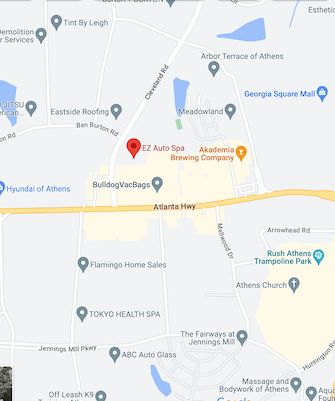
EZ Auto Spa has two locations conveniently located to serve the Metro Atlanta & Metro Athens area. We serve a wide geographic area and can work with your schedule to make your service happen.
Open Weekdays from
8:30-5:00
Call to ask any question
706-971-7867
EZ Auto Spa Duluth
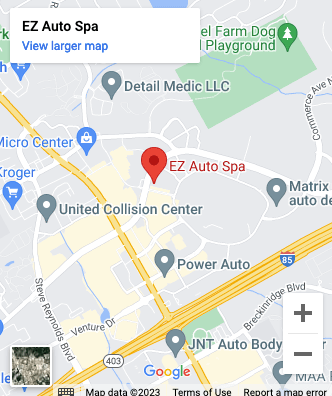
3492 Satellite Blvd #120 Duluth, GA 30096


